

(Updated: 14/03/2023)
Thanks to the wonderful cognitive enhancement pill NZT-48 featured in Limitless (based on Alan Glynn’s book), Cortexiphan in Fringe and CPH4 in Lucy, smart drugs have been thrust into the limelight and there are a lot of questions about the reality of these drugs and their effects.
Is NZT Just a Myth? Can the Limitless Pill actually exist in real life? Well, yes and no. NZT-48 doesn’t exist, but smart drugs are real.
I’ll begin this post by shattering the myth that both these fictional drugs and the premise of the films rely on.
Myth: Humans only use 10% of their brains.
The implication of this is that if you have the right training or drugs, you’ll be able to access all of it and significantly improve your memory, cognition and nearly any mental ability. While I’d love this to be true, it’s unfortunately very false. Neurologist, Barry Gordon stated:
We use virtually every part of the brain, and that (most of) the brain is active almost all the time.
Further to this, Barry Beyerstein, also a neurologist, demonstrated why the myth was false by highlighting the following;
- The most important being brain damage sufferers experience significant adverse effects on their mental abilities. If we were only using 10% of our brains, then damage to the other 90% shouldn’t impact our mental performance at all. However, it’s been shown that damaging any part of the brain impacts our mental capacity – even the smallest damage can have significant negative effects.
- MRI scans show that we use the majority of our brain, most of the time, but different areas show increased activity depending on the situation. Even during sleep when our bodies are inactive our brain still shows activity throughout. Different sections of the brain are responsible for different functions and MRI scans haven’#t found a single area in the brain which doesn’t appear to do anything.
- Our bodies evolved to be incredibly efficient. The brain is the biggest resource hog, accounting for over 20% of the body’s energy expenditure. If only 10% of the brain is used, this makes it an incredibly inefficient organ and we would be throwing 18% of our body’s resources away – a surefire way to become extinct very quickly. Additionally, the large human brain causes the biggest problems in childbirth, larger brains and larger heads cause more complications. Natural selection would have quickly culled any unnecessary brain size hundreds of thousands of years ago.
- The brain has a “use or lose it” policy in regard to maintaining synaptic links. If 90% of the brain were unused, this would have become obvious decades ago in post-mortems and autopsies as 90% of the brain would have degenerated.
So now we’ve got the myth out of the way, what are the realities of smart drugs, surely with our decades of medical and drug research we’d have designed something similar to NZT by now?
The Reality: Nootropics & Supplements
As I mentioned earlier, smart drugs do exist, but you won’t get the god-like abilities that you see in Limitless, Lucy or Fringe. They exist in 2 forms; supplements and nootropics.
Supplements
Yes, that’s right, supplements – the kind your doctor might prescribe if you’re a little low on vitamin c. There are in fact several vitamins/compounds that have been shown to improve brain health, memory, and focus; most of which you can get by following a healthy and nutritious diet, but if you need a little help, supplements are a good option.
Here are some of the most commonly studied:
- Omega-3 Fatty Acids: Omega-3s are essential fatty acids that are found in fatty fish, such as salmon, mackerel, and sardines. Research suggests that omega-3s can improve brain function and memory.
- B vitamins: B vitamins are essential for brain health and function, and deficiencies in B vitamins have been linked to cognitive decline. Vitamins B6, B9 (folate), and B12 are particularly important for brain health.
- Caffeine: Caffeine is a natural stimulant that can improve alertness, concentration, and cognitive performance.
- Ginkgo biloba: Ginkgo biloba is a herbal supplement that has been used for thousands of years to improve memory and cognitive function. It is believed to work by improving blood flow to the brain.
- Creatine: Creatine is a substance that is naturally produced in the body and is involved in energy production. Research suggests that creatine supplementation can improve cognitive function, particularly in vegetarians and vegans who may have lower creatine levels.
- Bacopa monnieri: Bacopa monnieri is a herbal supplement that has been used in Ayurvedic medicine for centuries to improve memory and cognitive function. Research suggests that it can improve memory and cognitive performance in both healthy adults and those with cognitive decline.
I’m guessing though, that you don’t want to take 6 pills every day, which is why Heights was developed.
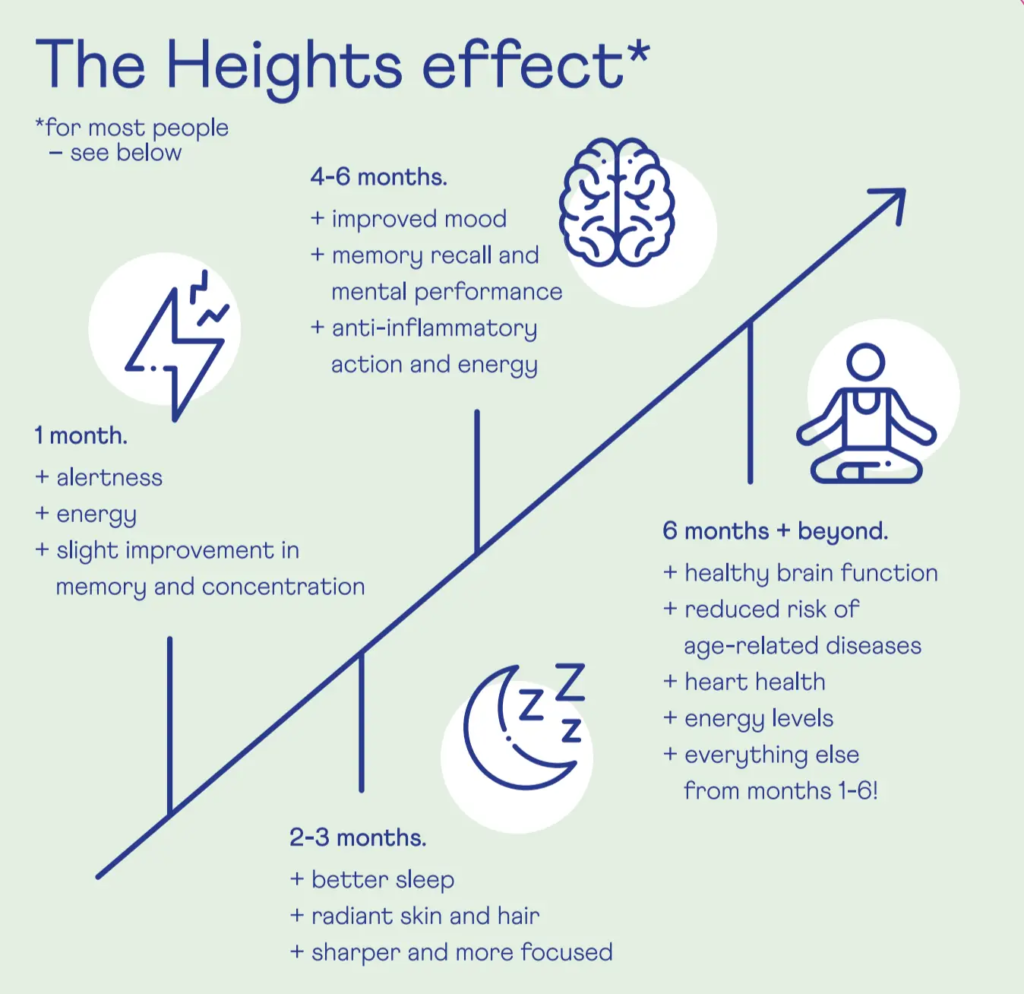
Heights have created a smart supplement which is “A clean, high-impact formula of 20 essential vitamins, minerals, healthy fats, and antioxidants in 2 capsules a day. With double-barrier technology to optimise absorption.” These supplements are proven to:
- Improve concentration and mental performance
- Increase attention-span
- Improve memory and recall
- Support cognition and brain health
Nootropics
The second option is nootropics. These content compounds that you’re far less likely to consume naturally as part of your normal diet.
How do nootropics work?
Nootropics target neurons’ metabolism and oxygen within the brain. The effects are often minimal but noticeable. They affect mood, motivation, reaction time, memory enhancement, attention, excitability, alertness, and focus.
The long-term risks and benefits of nootropics are widely unknown, but there is a lot of evidence to support the short-term advantages. Most brains are not fully developed before the age of 25, so nootropics are likely to be harmful to anyone under that age limit, especially young children.
I can’t stress how important it is to ensure you fully understand the laws and regulations regarding nootropics in your country/state additionally, if you choose to test out some nootropics, decide what area needs improvement: anxiety, mood, focus, attention, reasoning, etc. Do your research well and don’t just take anything and everything – have a specific goal in mind and only consider nootropics that directly affect that area. Also, make sure your nootropic of choice has a certificate of analysis (COA); this proves that it is authentic and pure. Some off-labels include toxic substances such as mycotoxin, so avoid those.
Stacking refers to using more than one nootropic at once. Please understand that nootropics and stacking will ultimately impact the neurotransmitters in your brain, which can have adverse effects of depression, anxiety, mania, and withdrawal.
Although you won’t have superpowers like those portrayed on television taking these can certainly provide some benefits. Here is a list of the nootropics to consider:
- L-Theanine: Found naturally in tea since it performs best when stacked with caffeine. This reduces mild anxiety and enhances attention while promoting relaxed attention. The main side effect is headaches. It’s worth noting that you won’t build up a tolerance or get addicted to this. Give it 30 minutes to kick in. Grab some here (USA) or here (UK)
- Piracetam deserves credit for the term nootropic: it was coined in reference to piracetam’s ability to boost one’s energy, focus, mood, and motivation. It’s the oldest nootropic and the most thoroughly researched. Studies have shown it may increase the memory of the elderly but may increase the decline in cognition over time. It may cause headaches or stomach pain. Some people choose to stack this with choline to reduce headaches.
- Creatine Bodybuilders and fitness fanatics are the largest consumers of creatine. Creatine enhances executive functioning best in those populations because the brain uses creatine to keep energy levels high. It helps the body to work out for longer. If you are sleep-deprived, a vegetarian, or vegan, this is the nootropic to consider. C Minimal side effects include nausea, stomach pains, or diarrhoea
- Magnesium is found in nuts and seeds (pumpkin seeds, chia seeds, almonds, cashews, brazil nuts etc.), chard, and kale. Magnesium deficiency is one of the most common deficiencies and can lead to fatigue, muscle soreness, insomnia and headaches. Increasing magnesium can improve memory and learning abilities. I personally suggest BetterYou’s Magnesium Oils and Flakes as taking magnesium transdermally doesn’t lead to the stomach discomfort that some oral pills can. Gabr some here (USA) or here (UK)
- Curcumin Medicinally used in China and India, curcumin is extracted from turmeric. The many benefits of this have been intently studied recently: increased alertness, better working memory, improved cognition in the elderly, antidepressant effects, plus works as an anti-inflammatory. Be aware of body rashes, headaches, swelling, yellow stool, upset stomach, and tightness in your chest while using. It stacks best with piperine.
- St. John’s Wort (hypericum perforatum) Another common nootropic, St. John’s Wort’s active ingredient, hyperfornin, inhibits the uptake of multiple neurotransmitters, enhancing mood and acting as an anti-depressant. A recent study recognized that this sometimes works as effectively as traditional anti-depressants but without the many side effects. Expect possible headaches, restlessness, anxiety, fatigue, irritability, upset stomach, or diarrhoea.
- Kava Known in the southern Pacific for years, this may help to reduce anxiety, and benefit sexual functions for women, with few side effects such as drowsiness. A link between kava and liver toxicity has been discovered so caution should be taken if you have a liver condition or drink alcohol regularly.
- Bacopa Monnieri After 8 weeks of use, this provides memory enhancement, especially in older adults. It was historically used as a medicinal herb but may cause nausea, cramps, fatigue of muscles, drowsiness, or lethargy
- Ashwagandha This is best known as an anxiety reducer that was found in India over 3000 years ago. There is only one known side effect: hyperthyroidism.
- Methylphenidate This increases norepinephrine and dopamine within the brain and works best as a memory enhancer, often prescribed for people with ADHD. Be cautious of addictive qualities, insomnia, loss of appetite, heart palpitations, nausea, anxiety, and irritability.
- Mixed Amphetamine Salts (Adderall) Another commonly known nootropic, Adderall enhances cognition for those needing improvement, but actually impairs high-performers. Like methylphenidate, be aware of its addictive qualities, insomnia, loss of appetite, heart palpitations, nausea, anxiety, irritability, plus changes in mood, euphoria, increased blood pressure, paranoia, mania, and tolerance.
L-Deprenyl
Associated with treatment for Parkinson’s disease by increasing dopamine and phenethylamine. It may improve learning and lift your mood, plus it is also suggested that it could reduce mild depression. Rodents had a longer lifespan when taking this, but unfortunately, there isn’t evidence of this in humans yet. If stacked with tyramine, it may increase blood pressure and get flagged on drug tests. High doses could require dietary restrictions. The short-term side effects are dry mouth, euphoria, insomnia, and an increase in libido. Note: the mixture of oral contraceptives and the standard dose of L-deprenyl may be dangerous.
Tyrosine
Tyrosine naturally occurs within the body, plus in turkey, avocados, and some dairy products. It’s known to improve energy, and creative thinking, and decrease symptoms of depression. It works best when you are under stress, but the effects are not typically long-lasting. May increase the risk of side effects if taken with MAO inhibitors.
CDP-choline
This increases available dopamine and energy (ATP) within the brain. Some evidence suggests that attention is increased in the elderly and teens, attention increases in low-performing individuals, and performance is impaired in normal or high-functioning people. Its neuroprotective properties make it extremely safe and helpful to those with cerebral disorders. Leg swelling, headaches and anxiety could be expected as side effects.
Modafinil
Best known for stimulating wakefulness and improving effects of sleep deprivation. May also improve reaction time. Possible side effects include increased blood pressure, irritability, or anxiety. If you’re a high performer, then this is likely to work best for you.
Adrafinil
One of the oldest known modafinil drugs for providing energy, alertness, increased concentration, and productivity. But the risk of harming your liver (plus anxiety, increased blood pressure, and irritability) may outweigh the benefits, which is why it is not allowed in many countries.
Phenylpiracetam
If you’re a big-time fitness guru, then phenylpiracetam may interest you. It’s on the Olympic sports banned substances list because it seems to be the most stimulatory drug in the Racetam family. It has the potential to increase your stamina and tolerance during workouts, enhance cognition functions, improve your memory, or alleviate symptoms of depression.
Donepezil
This may help executive functioning in healthy individuals, but it mainly prescribed for dementia and Alzheimer’s patients. Unusual dreams, depression, nausea or diarrhea may be side effects.
Noopept
Known for enhancing memory, attention, learning capacity by increasing alpha and beta brain waves. Headaches, irritability, high blood pressure are the slight symptoms one may experience.
Ampalex
Want to increase your joy and improve your mind? Ampalex allows for a long-term state of excitement that enhances memory. Side effects include insomnia, stomach pain, heartburn, fatigue, and rashes.
Tianeptine
This is used to treat major depression and promote a sense of well-being and mental clarity. It can include symptoms of abuse and withdrawal. It is recommended not to exceed proper dosing, as this can cause significant effects, such as nausea, vomiting, hepatitis, dizziness, abdominal pain, weight loss, liver toxicity, anorexia, itching, loss of appetite, and possibly death.
NSI-189
This is a compound found to be a cognitive enhancer and antidepressant. Because of it’s combative effect on hippocampus atrophy, it may be of benefit to soldiers post-war.
Alpha Brain
Based on two studies, Alpha Brain has been shown to improve verbal learning, and claims to enhance memory and learning. Headaches, irritability, and anxiety are possible side effects of this well-known and safe nootropic.
Alpha-GPC
Alpha-GPC has been studied for its potential cognitive-enhancing and neuroprotective effects. It is believed to increase the production of acetylcholine, a neurotransmitter that plays an important role in cognitive function, memory, and learning. Studies have shown that supplementing with Alpha-GPC may help improve cognitive function, memory, and attention in healthy individuals, as well as in those with cognitive impairment or neurodegenerative diseases.
Summary
On the whole, Nootropics are considered safe when taken properly. The negative side effects are often minimal and few, but the benefits are generally noticeable and beneficial. So, although you may not end up like the characters in Limitless or Lucy, you will probably end up with a better version of yourself that can think clearer, remember better, and be more excited about life.







I want to improve my brain function.
NICE HELP WITH FOR MY RESEARCH
I am 69 years old and have been forgetting things more frequently than before. Need help.
Can you please add Alpha-GPC and its description to your list? I first heard of it in an episode of the tv show, Eureka, but sure enough, it actually exists.
I’ve added in a short description at the bottom of them list.
Great article! It really breaks down the myth vs. reality of cognitive enhancers in a clear and scientific way. I found the section on nootropics and their varied mechanisms particularly insightful.
This might be a bit of a tangent, but your mention of prescription drugs like Modafinil made me think of a huge practical hurdle for many people: access. I recently read a fascinating and slightly terrifying article about why foreign prescriptions are completely invalid in the U.S. and the nightmarish situations it creates for travelers and expats. Sorry to drop a link, but it really helps illustrate the point I’m curious about: https://pillintrip.com/ru/article/why-your-foreign-prescription-wont-work-in-america-and-what-to-do-about-it
Given your expertise on the subject of smart drugs, have you come across any practical advice or strategies for individuals who rely on prescribed cognitive medications and need to travel internationally, especially to countries with strict pharmaceutical laws like the U.S.? It seems like a critical piece of the puzzle for anyone considering these options long-term.